
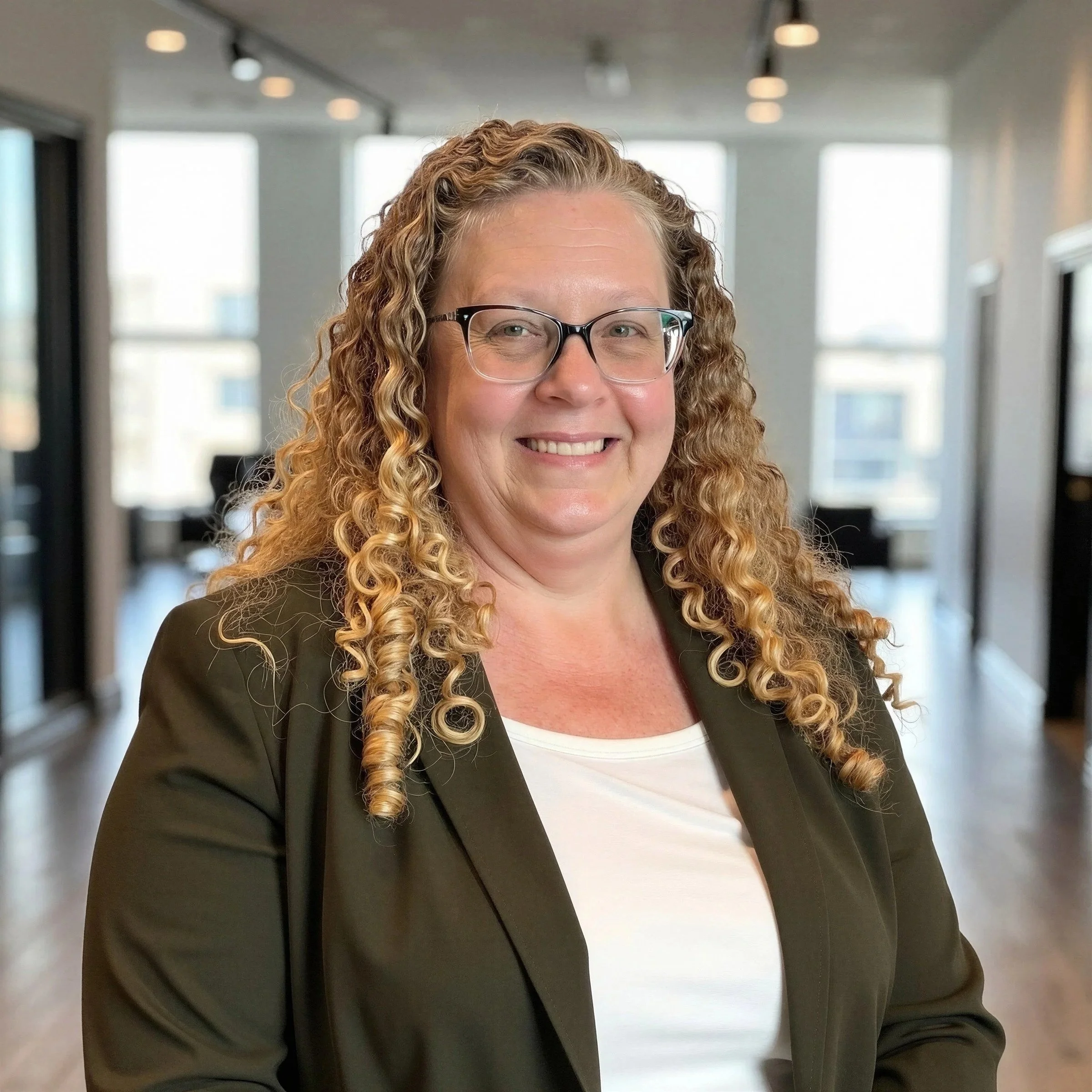
ABOUT DR. JO
You Don't Have To Delete Your Résumé To Change Your Relationship With Alcohol.
Dr. Joanne Ketch | Executive Sobriety Coach | Sober in the C-Suite®
I've spent most of my professional life helping people understand their relationship with alcohol, stress, and the habits they've
developed to manage both.
But before I became a therapist and sobriety coach, I spent years in business management, consulting, and organizational leadership. I've owned businesses, managed people, made difficult decisions, dealt with competing priorities, and been responsible for outcomes that affected more than just me. I was learning about Executive Stress™ without knowing it was a “thing.”
I know that being capable, productive, and successful doesn't mean everything in your life is working the way you want it to. In fact, sometimes the very skills that help you succeed professionally can make it harder to recognize when something needs to change.
You know how to solve problems. You're accustomed to taking responsibility, making decisions, and following through. So when you realize that your drinking has become a problem, it's reasonable to assume you should be able to handle that, too. Except you've probably already tried.And you'reThat's were I come in.
Here's The Thing.
Competence, intelligence, and productivity can coexist with drinking too much, anger, irritability, and other habits you want to change. Your titles are important and represent a lot of work, values, and commitment. Your résumé is part of you, but it doesn't tell the whole story.
I lived that internal contradiction.
Before I stopped drinking in 1991, I was a high-achieving, productive person with an education, a career, and plenty of evidence that I was capable. I also had a growing problem with alcohol that didn't fit with who I believed I was.
It was confusing to be competent in so many areas of my life and still struggle with something I thought I should be able to manage.
I've now been sober for more than 35 years.
That experience matters to my work, but it isn't the only thing I bring to the conversation.
I've also spent decades studying addiction, working with people who want to change their relationship with alcohol, and helping them understand the thinking patterns, habits, and circumstances that make those changes difficult to sustain.
I don't assume that someone who drinks too much is incapable of making good decisions, managing responsibilities, or building a successful life.
I also don't assume that being successful means their drinking isn't causing problems.
I take the problem seriously without assuming that your entire life is a wreck.
I've Been On More Than One Side Of The Desk.
My professional background isn't particularly conventional. My now grown kids often ask me, “Mom, how many lives have you lived?”
Before becoming a clinician, I worked in restaurant management, owned a daycare business, was a parenting coach, and worked as a management consultant. My career has also included roles as Program Manager, Director of Family Services, Clinical Director, Interim CEO, and being a member of Senior Leadership Teams.
I've managed, supervised, and led people with different personalities, priorities, abilities, and expectations. I've been accountable for organizational results, employee performance, difficult personnel decisions, budgets, and the competing demands that come with leadership. I’ve done root cause analyses, tracked key performance indicators, and developed strategic plans using that data. I’ve been a lead on several 3rd party audit and compliance audits.
I understand what it's like to be responsible for making decisions when there isn't a perfect option. I understand how work follows you home, how responsibilities accumulate, and how easily your own needs can become another item you'll deal with when you have time.
Executive Stress™ Isn't Just Having A Stressful Job.
There are particular demands that come with being responsible for people, decisions, outcomes, and organizations. You're expected to anticipate problems, make decisions with incomplete information, manage competing priorities, and remain effective when other people are looking to you for answers. And those responsibilities don't necessarily disappear when you leave work.
You may have considerable authority over some parts of your professional life and surprisingly little control over others. You may be responsible for outcomes that depend on people, circumstances, and decisions you can't control. And you may be so accustomed to functioning under pressure that you've stopped noticing how much of your available capacity it's consuming.
That's part of what I mean when I talk about Executive Stress™.
It isn't simply the amount of work you have to do. It's the combination of demands, expectations, responsibility, decision-making, and the resources available to manage them. I've experienced those demands as a business owner and organizational leader. I've also spent decades working clinically with the habits, thinking patterns, and coping behaviors people develop in response to stress.
The skills that make you successful at work don't automatically make you good at managing your own stress. You can be excellent at managing people, solving problems, and keeping an organization running while still struggling to figure out how to turn work off, relax, or have something left for the people and activities you care about.
And when alcohol becomes one of the ways you manage that transition, focusing exclusively on drinking can leave important parts of the problem unexamined.
I understand Executive Stress™ from both an organizational and a behavioral perspective. My work brings those perspectives together so we can examine not only your relationship with alcohol, but also the demands and patterns that have helped shape it.
And I know that sometimes the problem isn't simply having too much to do. It's that the tools you're using to manage everything are no longer producing the results you need. That combination of business leadership and clinical experience shapes how I approach sobriety coaching for professionals and executives. I'm not going to suggest that the solution to every problem is to quit your job, lower your standards, or eliminate the responsibilities that give your life meaning. Sometimes we need to reduce the load. Sometimes we need to increase the capacity.
You worked hard to build this life. I want to help you make room to enjoy it.
What it's Like To Work With Me
I'm all the things you read on nearly every therapist or coach website. I'm compassionate, I listen, and I don't judge people for the ways they've learned to cope. I create a safe, confidential, and welcoming space. But I’m in the room as Dr. Jo. And Dr. Jo is, well, Dr. Jo.
I'm direct.
I'll ask questions, offer observations, teach you what I know when it's useful, and probably challenge you sometimes. I'll also expect you to tell me when something doesn't fit.
You know your life better than I ever will.
I don't believe that hiring a coach means handing over responsibility for your decisions to someone else.
You own the project. I'm a consultant.
You bring your history, values, priorities, experience, and knowledge of your own life. I bring decades of experience understanding alcohol use, Executive Stress™, behavior change, and the processes that help people develop sustainable habits.
We'll put that information together.
We won't assume you're starting from scratch. You've already developed skills, strengths, relationships, routines, and resources that have helped you get where you are.
Some of those things are working well.
Some may need adjustments.
And some habits may have been useful at one point but are now creating problems of their own.
I want to understand what alcohol has been doing for you, what keeps bringing you back to it, and what would need to change so that drinking no longer occupies such an important place in your life.
That requires looking beyond how much or how often you drink.
We'll look at the demands you're managing, the expectations you're operating under, the habits you've developed, and how you're using your available time, energy, attention, and resources.
Sometimes we need to close a tab. Sometimes we need more RAM.
And sometimes we need to recognize that a tool we've relied on for years isn't working nearly as well as we thought it was.
My Approach: Understand The Pattern. Build What Works.
I engage with this work like it’s a root cause analysis. When something keeps happening despite repeated attempts to change it, I want to understand why.
What circumstances contribute to the pattern?
What purpose does the behavior serve?
What happens before and after it?
What have you already tried, and what can we learn from those attempts?
I also want to know what's working.
We don't need to dismantle every routine, challenge every belief, or change everything about your life to address your relationship with alcohol. We need to identify what supports the changes you want to make and what keeps getting in the way.
My coaching approach draws on decades of clinical experience, behavioral science, and practical strategies for managing Executive Stress™. We'll examine the relationship between your stress load, available capacity, thinking patterns, and automatic habits.
One of the frameworks I use is The Two Toolboxes™.
Over time, we develop a collection of ways to handle stress, manage emotions, decompress, and get through difficult situations. Some of those tools are healthy and effective. Others may have become automatic simply because we've used them so often.
Alcohol may be one of those tools.
The goal isn't simply to take a tool away and hope everything works out. It's to understand the job that tool has been doing, evaluate the alternatives, and develop habits and resources that can support the life you actually want to live.
I call that building a new default.
Not a plan that works only when your schedule is manageable, everyone is cooperating, and nothing unexpected happens. A way of living and managing your responsibilities that you can continue developing and adapting as your circumstances change.
For Those Who Need The Dr. Jo Deets
My professional education began with bachelor's degrees in English, with Honors, and Business Management, cum laude.
Years later, I earned my Master's in Counseling, summa cum laude, followed by a Doctorate of Professional Counseling specializing in Addictive and Compulsive Behavior. My doctoral work received the Doctoral Excellence Award.
I'm also a Licensed Professional Counselor Supervisor (LPC-S), Licensed Marriage and Family Therapist Supervisor (LMFT-S), and Licensed Chemical Dependency Counselor (LCDC).
My professional experience includes direct clinical practice, organizational leadership, developing addiction education and behavior-change resources for treatment settings, and working with individuals navigating complicated relationships with alcohol, stress, and other coping behaviors.
My work and expertise have also been featured in publications including NBC News, Psych Central, The Good Trade, and Byrdie.
I bring all of that experience to my coaching work, but I don't expect my credentials to do the work for me.
What matters is whether I can help you understand what's happening, identify useful changes, and develop a practical way forward.
You Already Have A Foundation Of Success. You Don’t Have To Wait Until It Fails.
You don't have to wait until your career, relationships, health, or reputation have suffered serious consequences to decide that you want something different.
You also don't have to know exactly what your relationship with alcohol should look like before we have a conversation. We can start by examining what's happening now, what you've already tried, and what you want to change.
The Executive Recovery Blueprint Intensive™ provides an opportunity to take a comprehensive look at your relationship with alcohol, your stress load, the tools you're relying on, and the changes that may help you move forward. You can use the Intensive as a standalone service or as the starting point for a longer coaching engagement. You don't need to dismantle the life you've worked so hard to build.
Let's figure out what will help you enjoy it.
Coaching through Sober in the C-Suite® is distinct from psychotherapy. Although Dr. Ketch is a licensed mental health professional, coaching services do not constitute psychotherapy, medical treatment, or substance use disorder treatment. When clinical or medical services are indicated, appropriate referrals or coordination of care may be recommended.